
How Color, Light & Handwork Shape Artisan Hard Candy
Hard candy looks deceptively simple once it cools into a glossy disc or jewel-like drop. Yet every stripe, spiral, and miniature cross-section has to be planned while the sugar is still warm, fluid, and moving.
Two Forms of Sugar: Stained-Glass Clear and Pulled Satin
One of the most fascinating parts of traditional hard-candy craft is that clear ruby gems and soft, opaque cream spirals come from the same foundational sugar base. The visual difference comes down to how light travels through the candy.
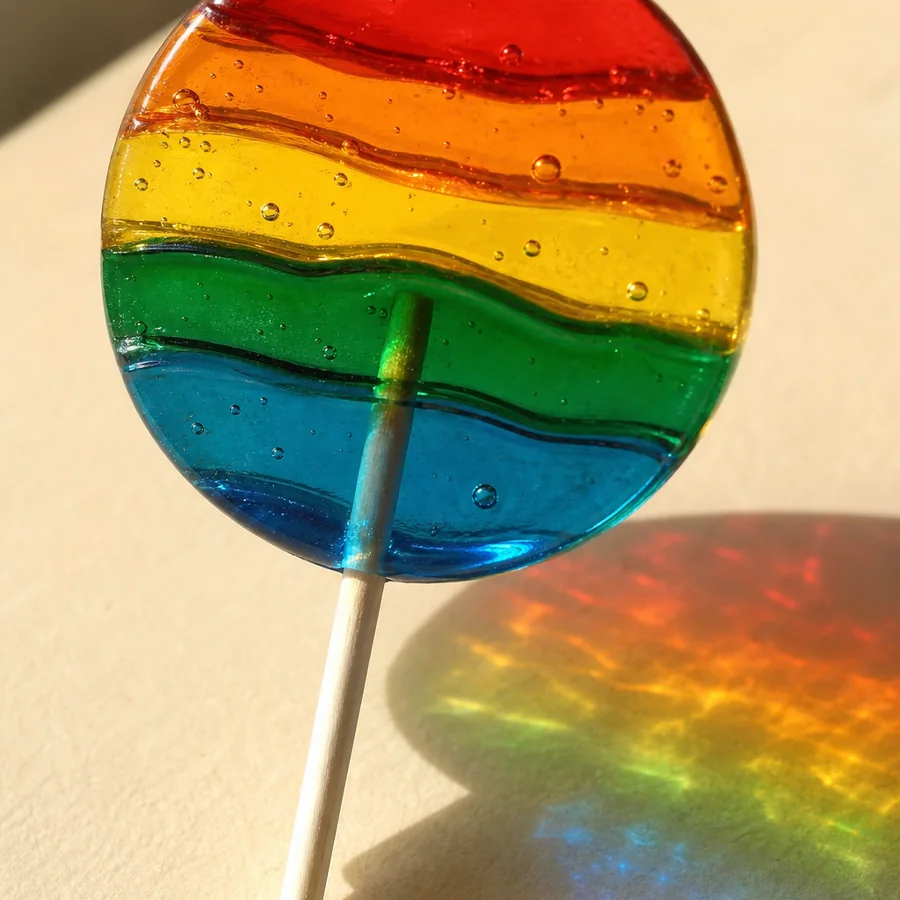
Left unpulled and poured gently, tinted sugar cools like colored window glass—allowing sunlight to pass straight through a Spectrum Prism Lollipop or Sundown Ribbon Lollipop and cast tinted reflections across a table.
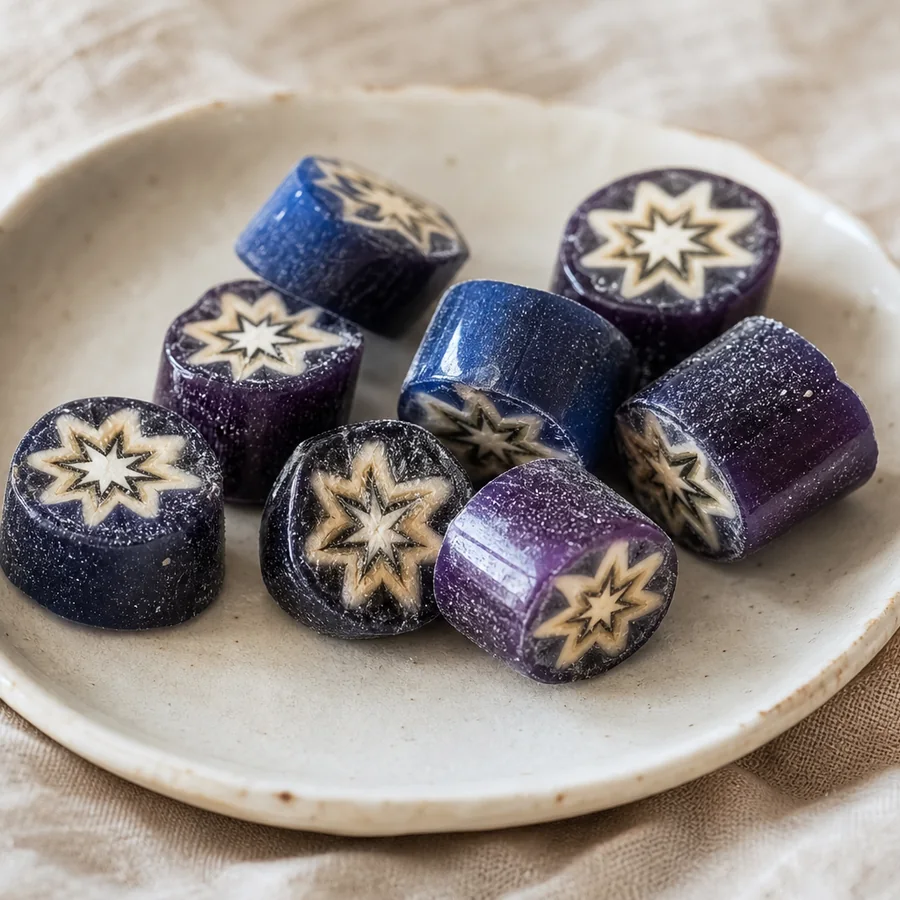
When warm sugar is repeatedly stretched, folded, and aerated by hand, thousands of microscopic air channels form along the grain. Those tiny air pockets scatter light into a pearlescent, satin luster—creating the creamy ivory ribbons in Celestial Nebula Swirl Pop and the wisteria pinwheels of Velvet Dusk Spirals.
From Sketch to Cross-Section
Developing a new piece at Lusterbrook Confections happens in stages, balancing visual geometry against how the flavor unfolds on the palate.
Planning the Color Architecture
Strong color contrast keeps patterns crisp. Pairing deep midnight indigo against aerated ivory cream—as in Nocturne Starlight Drops—keeps the central star legible even after a thick candy log is stretched down to bite-sized diameter.
Timing Temperature & Flow
Pour too warm and neighboring colors blur into one muddled shade; wait too long and sugar stiffens before ribbons can curve gracefully. Swirling a mosaic or coastal wave pattern requires working within a narrow window where each color holds its boundary while fusing cleanly into a smooth disc.
Shaping Individual Pieces
Cut-rock drops, pillow candies, faceted gems, and stick-mounted lollipops each call for careful hand handling as the sugar sets. Edges are inspected, sticks are seated cleanly, and finished pieces are protected from ambient moisture to preserve their high-gloss finish.
Embracing Small Handmade Variations
If you place two Tideglass Ripple Pops side by side, their turquoise and white waves will never trace the exact same line—any more than two ocean waves break identically on shore. You may also spot tiny, jewel-like air micro-bubbles suspended inside clear pours or slight differences in the angle of a cut pillow edge.
Mass-market candy factories engineer out variation using high-speed starch moguls and uniform dye stamping. In small-batch artisan confectionery, subtle visual individuality is part of what makes unboxing or gifting a set genuinely rewarding: the person receiving it can see immediately that human hands shaped the batch.
Combined with clean protective wrapping and thoughtful presentation, unusual hard candy becomes something adults keep on display in a glass dish, bring to dinner parties, and share slowly rather than tossing into a desk drawer.